A Muslim practice
Dhikr Counter
Thirty-three circles to fill in for a round of dhikr, the remembrance of God.

Remembrance
Dhikr means remembrance: words in praise of God, said over and over, aloud or under the breath. The Quran asks for it once the Friday prayer is over:
And when the prayer is ended, then disperse in the land and seek of Allah's bounty, and remember Allah much, that ye may be successful.
The Quran, Surah 62 (The Congregation), verse 10, translated by Marmaduke Pickthall (1930)
Thirty-three
After each of the daily prayers, many Muslims say SubhanAllah, glory be to God, Alhamdulillah, praise be to God, and Allahu Akbar, God is greatest, thirty-three times each, and many end with a declaration of God's oneness to make a hundred.
The tasbih of Fatimah, which the Prophet taught his daughter, uses the same three phrases but says Allahu Akbar thirty-four times, also making a hundred. Shia Muslims are encouraged to recite it after every prayer.
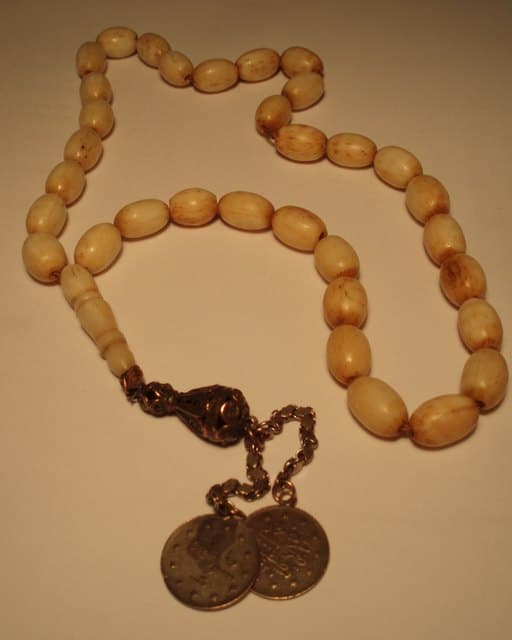
Prayer beads, called a misbaha or tasbih, are often strung with 33 or 99 beads to keep the same count.
How the module works
Thirty-three circles on the daily page, in groups of eleven. Fill one in for each repetition, or one for each round, whichever suits you. Without beads, it keeps the count where you can see it. For the tasbih of Fatimah, say one more Allahu Akbar after the last circle.
A filled page is a record, not a score. The count is there to keep the mind on the words.
Sources
Put it in your planner
Start your plannerFind Dhikr Counter in the module drawer, under Philosophy & faith. Free, and no account needed to try it.