A Buddhist practice
Metta Practice
Loving-kindness wished one person at a time, moving outward: yourself, someone you love, someone neutral, someone difficult, then all beings.
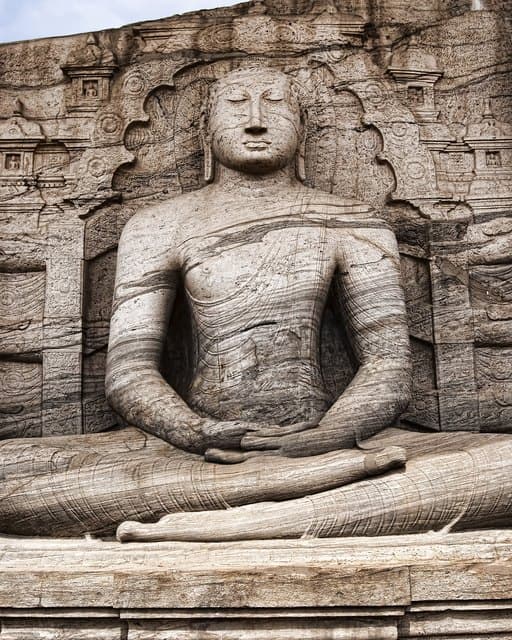

Metta
Metta is a Pali word for loving-kindness or friendliness: wishing others well, and meaning it. The best-known teaching on it is the Metta Sutta, ten short verses in the Sutta Nipata, an early collection of the Buddha's discourses. Theravada monks still chant it. Metta is goodwill, not attachment: it wishes others well without needing anything back.
As a mother at the risk of her life watches over her own child, her only child, so also let every one cultivate a boundless (friendly) mind towards all beings.
And let him cultivate goodwill towards all the world, a boundless (friendly) mind, above and below and across, unobstructed, without hatred, without enmity.
The Metta Sutta, Sutta Nipata 1.8, verses 7 and 8, translated by V. Fausböll (1881)
Reading the verse
Verse 7 compares the meditator to a mother guarding her only child. Some teachers read it as a picture of how much to feel. Others read it as a picture of how carefully to guard this goodwill once you have it.
One person at a time
The order on this module comes from later teachers. Buddhaghosa's Visuddhimagga, a manual of practice written in Sri Lanka in the fifth century, starts with yourself, then someone dear, then someone neutral, then someone hostile, until the goodwill makes no distinction between them. Modern teachers usually end with all beings.
Starting with yourself is not selfish. The Visuddhimagga's reason is that once you see how much you want to be happy, you can see that everyone else wants it too.
How the module works
Five prompts with a line each, on the daily page: Myself, Someone I love, Someone neutral, Someone difficult, All beings. Sit for a minute or two with each, and wish them well in a simple phrase, such as may you be safe, may you be happy. Then write the name and the phrase you used.
Someone neutral can be anyone you passed today without a second thought: the bus driver, the person at the next desk. For someone difficult, start with a small annoyance, not someone who has hurt you badly. The old manuals build up to the hardest people slowly.
Sources
- The Sutta-Nipâta, translated by V. Fausböll, in The Sacred Books of the East, volume 10, part 2 (Oxford, 1881): the Mettasutta.
- Buddhaghosa, Visuddhimagga, chapter 9, on loving-kindness.
Put it in your planner
Start your plannerFind Metta Practice in the module drawer, under Philosophy & faith. Free, and no account needed to try it.