A Jewish practice
Parashah Study
The week's Torah portion, what stood out in it, and what it asks of you.

The weekly portion
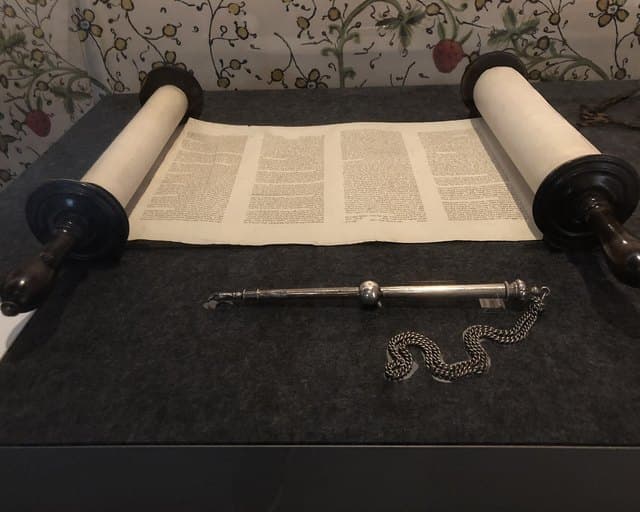
The Torah, the five books of Moses, is read aloud in synagogue in 54 weekly portions. Each portion is named for one of its first words. Part of it is read on Shabbat afternoon and on Monday and Thursday mornings, and the main reading comes on the next Shabbat morning.
Most synagogues read the whole Torah in a year, and the cycle ends and begins again on Simchat Torah, in the autumn. Some years have fewer weeks to fill than others, so in those years some portions are read together. Many Conservative and Reform congregations follow a triennial cycle instead, reading a third of each portion a year.
Why study it
Studying the week's portion puts you on the same page as everyone else reading it that week. The Torah itself asks for its words to be part of ordinary days:
And these words, which I command thee this day, shall be upon thy heart;
and thou shalt teach them diligently unto thy children, and shalt talk of them when thou sittest in thy house, and when thou walkest by the way, and when thou liest down, and when thou risest up.
Deuteronomy 6:6 and 7, The Holy Scriptures, Jewish Publication Society (1917)
How the module works
Three prompts with two lines each, on the weekly spread. Write the portion's name and where it starts, then what stood out to you, then what it asks of you this week.
Any Jewish calendar or synagogue newsletter gives the week's portion. The verse above is from the 1917 Jewish Publication Society translation because it is free to use; many readers study with a newer one.
Sources
Put it in your planner
Start your plannerFind Parashah Study in the module drawer, under Philosophy & faith. Free, and no account needed to try it.