A Christian practice
Verse Mapping
Take one verse apart over a week: write it out, compare translations, follow its cross references, and note what it asks of you.

Where it comes from
Verse mapping is a recent name for an old way of studying: one verse at a time, with other Bibles and reference books open beside it. The book of Acts praises the Jews of Berea for reading this way when Paul brought them his message:
These were more noble than those in Thessalonica, in that they received the word with all readiness of mind, and searched the scriptures daily, whether those things were so.
Acts 17:11, King James Version (1611)
Verses and references
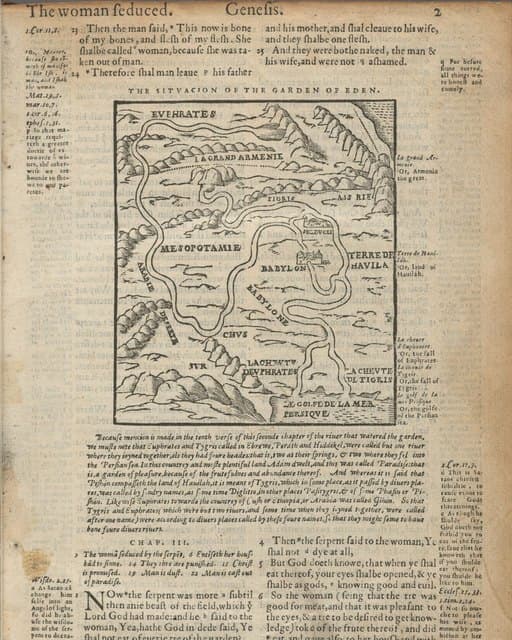
The method depends on something the Bible did not always have. Around 1205, Stephen Langton, a Paris theologian who became Archbishop of Canterbury, divided its books into the chapters still used today. The Paris printer Robert Estienne numbered the verses of the New Testament in his Greek edition of 1551, and the Geneva Bible of 1560 was the first English Bible with both chapters and verses. The page above is from it, with its verse numbers and the notes in its margins.
For following a word, Strong's Concordance, first published in 1890, lists every place each word appears in the King James Version. It shows where a word is used. What it means in each place still depends on the sentence around it.
How the module works
Four prompts with two lines each, on the weekly spread: The verse, Other translations, Cross references, What it asks of me. One verse is enough for a week.
Copy the verse out, then note a word or phrase that reads differently in another translation. Under Cross references, write the references, not the verses, so the lines go further. The last prompt is the point of the rest: what the verse asks of you this week.
Sources
- The Holy Bible, King James Version (Project Gutenberg): Acts 17:11.
- James Strong, The Exhaustive Concordance of the Bible (1890).
Put it in your planner
Start your plannerFind Verse Mapping in the module drawer, under Philosophy & faith. Free, and no account needed to try it.