A Muslim practice
Quran Reading Plan
Thirty marks, one for each juz', so the whole Quran can be read in a month, as many do in Ramadan.

Thirty parts
The Quran has 114 surahs, of very different lengths. For reading and recitation it is also divided into thirty parts, each called a juz'. The parts are a division for reading, so one can begin partway through a surah.
In the Middle Ages, mosques often kept their copies of the Quran as sets of thirty volumes, one for each part. In Ramadan today, many Sunni mosques recite the whole Quran in the taraweeh prayers, often at a juz' a night.
At your own pace
A month is a common pace, not a rule. The Quran itself asks for what can be managed:
...Recite, then, of the Qur'ân that which is easy for you...
The Quran, Surah 73 (The Enshrouded One), verse 20, translated by Marmaduke Pickthall (1930)
How the module works
Thirty numbered marks, grouped in tens. It goes once, at the front of the book. Mark each number as you finish that juz'.
A juz' a day finishes in a month. Two pages a day takes most of a year. Either way, the marks keep your place.
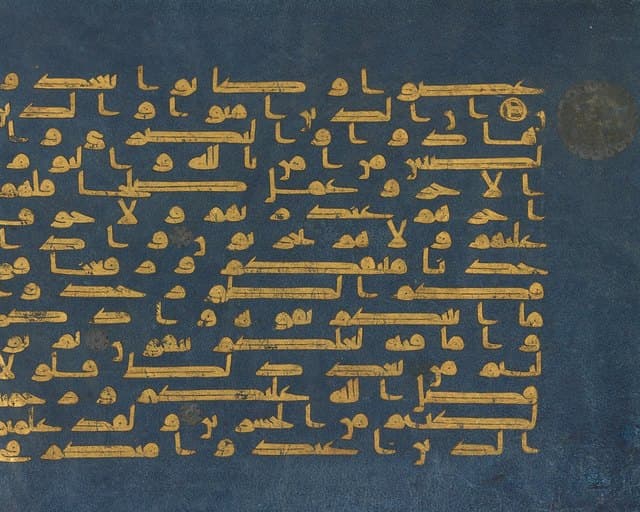
The page above is from the Blue Quran, written in gold on parchment dyed with indigo, sometime between the eighth and tenth centuries.
Sources
Put it in your planner
Start your plannerFind Quran Reading Plan in the module drawer, under Philosophy & faith. Free, and no account needed to try it.