A Stoic practice
Stoic Evening Review
Three questions answered before sleep, the way Seneca says he reviewed his day.
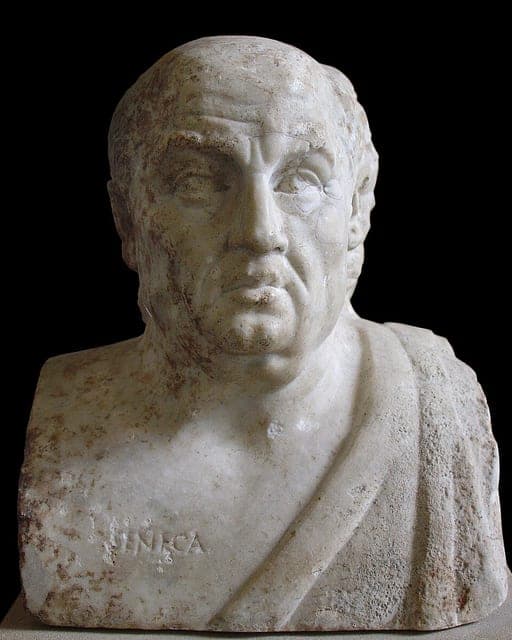

Seneca's evening
In his essay On Anger, written in the first century, Seneca says he learned the habit from the philosopher Sextius, who asked himself each night what bad habit he had cured that day, and in what way he was better. Seneca kept it every night. He describes it as a trial, with himself as both the accused and the judge, and says anger grows gentler when it knows it must answer for itself every day.
I make use of this privilege, and daily plead my cause before myself: when the lamp is taken out of my sight, and my wife, who knows my habit, has ceased to talk, I pass the whole day in review before myself, and repeat all that I have said and done: I conceal nothing from myself, and omit nothing...
Seneca, On Anger, Book III, chapter 36, translated by Aubrey Stewart (1900)
The three questions
The questions on this module are older than Seneca. They come from the Golden Verses, a Pythagorean poem that Epictetus, a Stoic teacher of the next generation, quotes to his students and tells them to keep ready for use.
What did I do badly? What did I do well? What did I leave undone? They follow the poem's third line in order.
Let sleep not come upon thy languid eyes
Before each daily action thou hast scann’d;
What’s done amiss, what done, what left undone;
From first to last examine all, and then
Blame what is wrong, in what is right rejoice.
Epictetus, Discourses, Book III, chapter 10, translated by George Long (1877)
How the module works
Three prompts with two lines each, on the daily page. Answer them in order, and keep it short: the point is to look at the day honestly, not to write it all down.
Seneca's own review ends kindly. Having found where he argued too hard or spoke too freely, he pardons himself and resolves to do better, then sleeps. The last line of the verse says the same: blame what is wrong, and rejoice in what is right.
Sources
Put it in your planner
Start your plannerFind Stoic Evening Review in the module drawer, under Philosophy & faith. Free, and no account needed to try it.