A Stoic practice
Stoic Morning Page
Three questions to start the day with, the way Marcus Aurelius started his: by deciding in advance how he would meet it.
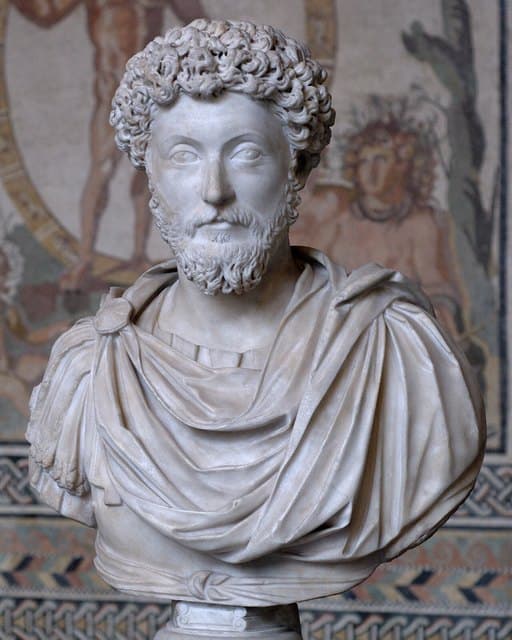

Marcus Aurelius's morning
Marcus Aurelius was Roman emperor from 161 until his death in 180. His Meditations are notes he wrote to himself in Greek, never meant to be read by anyone else, and he wrote some of them in army camps on the Danube frontier, during the Marcomannic Wars. The first book ends "Among the Quadi at the Granua," and the second "This in Carnuntum."
The second book opens with a morning exercise. Before the day begins, he names the kind of people he will meet, and reminds himself why they cannot harm him, and why he should not hate them:
Begin the morning by saying to thyself, I shall meet with the busybody, the ungrateful, arrogant, deceitful, envious, unsocial. All these things happen to them by reason of their ignorance of what is good and evil.
...I can neither be injured by any of them, for no one can fix on me what is ugly, nor can I be angry with my kinsman, nor hate him. For we are made for co-operation, like feet, like hands, like eyelids, like the rows of the upper and lower teeth.
Marcus Aurelius, Meditations, Book II, section 1, translated by George Long (1862)
The three questions
The first question is the one Epictetus taught: what is up to you, and what is not. Marcus thanks his teacher Junius Rusticus, in the Meditations' first book, for introducing him to Epictetus's lectures.
The second is the obstacle. Marcus does not pretend that obstacles can be avoided. He says they can be used:
...the mind converts and changes every hindrance to its activity into an aid; and so that which is a hindrance is made a furtherance to an act; and that which is an obstacle on the road helps us on this road.
Marcus Aurelius, Meditations, Book V, section 20, translated by George Long (1862)
How the module works
Three prompts with two lines each, on the daily page: What is in my control today? What obstacle should I expect? Which virtue will I need?
The Stoics counted four virtues: wisdom, justice, courage and moderation, and held that they come together: you cannot have one fully without the others. For the third prompt, pick the one the day will ask for most, as a place to put your attention. The module pairs with the Stoic Evening Review, which asks at night how the day really went.
Sources
Put it in your planner
Start your plannerFind Stoic Morning Page in the module drawer, under Philosophy & faith. Free, and no account needed to try it.